Fall Colors 11 Nov 2022


The garden is continuing to ebb as the temperatures slowly decline.  It is a slow march into winter but this past week, the colors of the changing leaves have been unmatched.  It is made ever more noticeable because of the clear blue skies and the dry weather.

In addition to the leaves, I still have some persistent blooming flowers to show you.


Chestnut Oak (Quercus montana).  This tree stands near the Mens Garden along the side of the elevated roadway.  Last year, I found some acorns underneath it that were sprouting.  I took them home and I now have a chestnut oak in my own yard.

img_3539


Oakleaf hydrangea (Hydrangea quercifolia).  This native shrub provides four season attraction.  The red fall coloration is beautiful.  This particular shrub is at the edge of a small woodland and really stands out since it is south facing.

img_3540


Flowering dogwood (Cornus florida).  This dogwood was planted several years ago and has taken some time to be established.  It performed well this year so I am expecting to see it bloom this spring.

img_3541


Sweetspire (Itea virginica)  This small shrub is another Alabama native which performs so well.  It has thrived in this location also on the south facing side of a small woodland.  It should also bloom well in the spring with its characteristic tassel.

img_3542


Obedient plant (Physostegia virginiana).  This native established itself near the fountain of the Mens Garden.  It is a fall bloomer and really shows out.

img_3543


Red mulberry (Morus rubra).  This is a well established tree, along the east facing side of my property line, which bears a lot of fruit in the  spring.  If you want some of the berries, you have to beat the squirrels and the birds to it since they really love them

img_3544


Sugar maple (Acer saccharum).  I planted two of these trees along my property line 40 years ago.  Each year I think they will show the rainbow of colors characteristic of this tree but each year it produces this brilliant gold.

img_3545


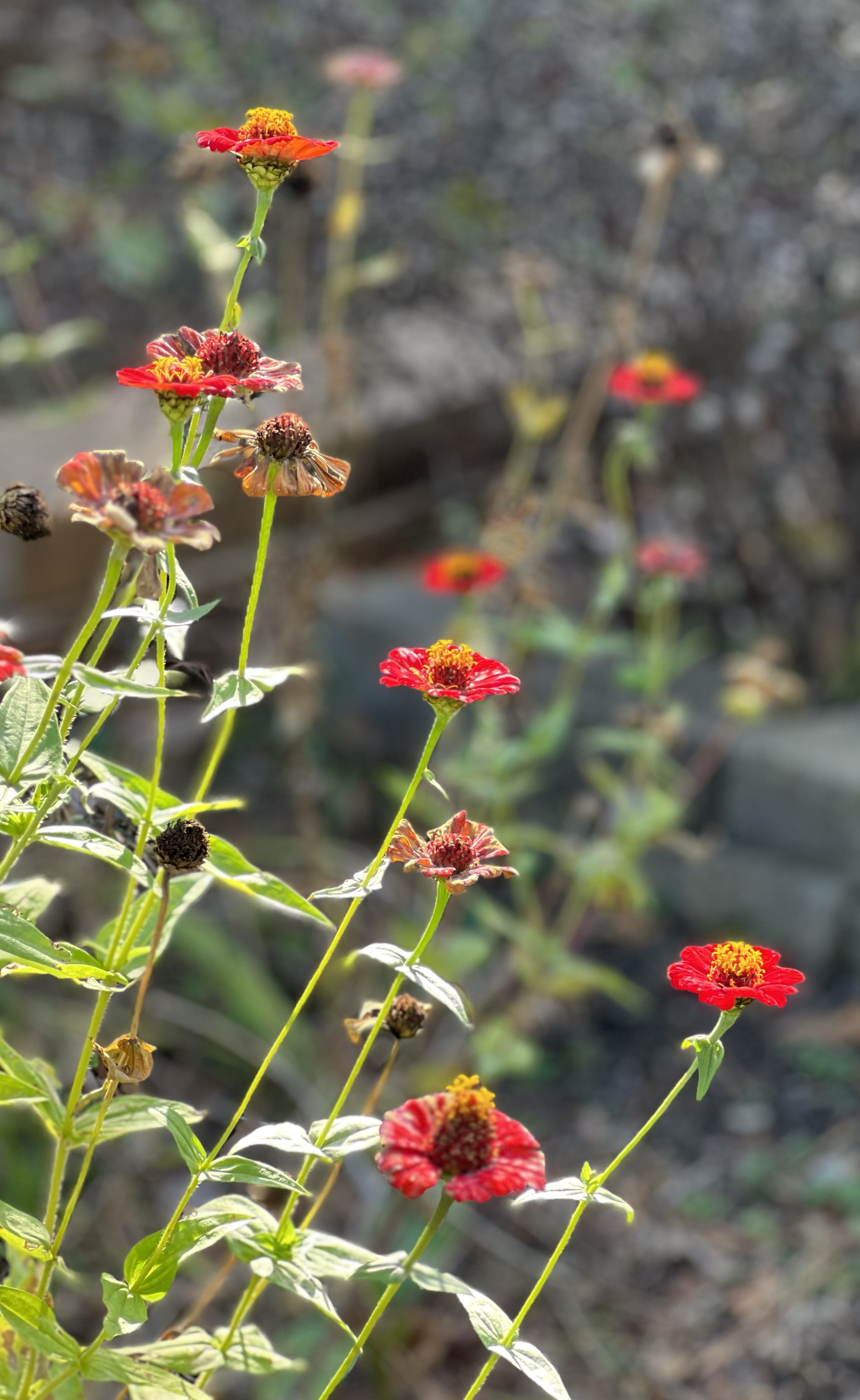
Zinnias.  These zinnias haven’t given up.  I am still seeing Monarchs, Gulf fritillaries and Clouded sulphurs coming for nectar.

img_3555


Well, that’s my lot for this week.  I enjoy this exercise of finding six photos (more or less) to keep up to date with the happenings in my garden world.  If it brings you pleasure to view them, then my job is doubly fulfilled.

Check out Jim Stephens Garden Ruminations.  He is hosting Six on Saturday where you can view gardeners from around the world who share in this exercise.


Bird Project 1 July 2022

This past week, I noticed a pair of goldfinches feeding on the liatris in my perennial bed.  The male was that bright gold color.  They came out of the thicket along the edge of my property where there are some pine trees and a mulberry.

I have had them come to my bird feeder in the winter but I have not seen them in the summer.  It made me think about what I could do to keep them around all year.

My research showed that their diet is mostly seeds unlike the majority of  songbirds.

Here are goldfinches on liatris spicata which is also known as gayfeather.

A2C47876-B193-40C0-A413-18CFF3FBEB50

The goldfinches will also feed on the seeds from purple coneflower which grows as a native in our area.

The purple coneflower will last until frost.  You can keep the seedheads on through the late fall and into winter for the finches to feed on.

4E7471FB-3918-4F80-A04E-F8687458537E

Another summerlong flower that they will feed from is a zinnia.  Zinnias here will bloom all summer long.

8FFDEE27-C3D5-4E5C-8BF8-CA64D8146DEF
Gold finch on zinnia

The sunflower is another good food source.  Sunflowers can be left standing into the winter and the goldfinches will come to them.

37F816C2-1793-4FC1-9EBA-22C81753ED8A
Goldfinch on sunflower.

The goldfinches will feed on native grasses in the winter in our area.  These will contain seeds to support them in the winter.

Thought you might enjoy seeing these limelight hydrangeas in full bloom.  The goldfinches do not use birdboxes.  This one is for the bluebirds.  It was erected in the spring but is not presently occupied.

img_3157

Switching themes, here is a photo of this colorful canna.  I am not sure of the name but I think it is Tropicana

img_3154

Ending today’s photos with the agastache and a Stoke’s Aster which are both showing beautiful colors in the summer.

img_3156img_3155

It is Independence Day here in the USA on Monday so it is a weekend of celebration and little gardening.

Be sure to check out the propagator


Shade and sun

We have been through a few rainy days brought on by a tropical depression coming off the Gulf of Mexico.  The sun has returned today and the garden will now burst forth.  The trees and shrubs are fully arrayed in their leafy glory so there is plenty of shade.  The shade will protect the more tender of plants from the intense summer sun which is coming.

This is a beautiful time in the American South.  Here are my photos for the day.

This is a mock orange planted 3 years ago.  It has had a slow start but lots of beautiful blooms now.  It is a glorious sun lover.

img_3050

This is a Rudbeckia (Indian Summer) that I started from seed.  They are planted in a mixed bed with some dahlias that I also started from seed.  They are doing well in this sunny location.

img_3052

This daylily is one of a group that is thriving in afternoon sun.

img_3054img_3051

The oak leaf hydrangea is in morning sun and some afternoon sun.  It has been in this location for many years.  It is particulary glorious this year.  It is an Alabama native.

img_3053

This hosta thrives on the shady side of the house protected by a lorapetalum.  It used to suffer from slug damage but a little diatomaceous earth has stopped that this year.

img_3055

The majestic caladium Candide proudly sits in this planter at the entrance to the Mens Garden.

img_3056

Hope you enjoyed the tour of the sun and shade.

Be sure to check out the Propagator