It is Father’s Day on June 17. I am grateful for my father and also my mother who are my inspiration for my love of gardening. My father taught me the basics of gardening: light, water and soil. My mother inspired my love of flowers.
The weather in central Alabama has changed from 3 weeks of dry weather to a week of daily rain with some thunderstorms with damaging winds. How about just a steady drizzle!
The heat is associated with increasing humidity so morning gardening is preferred but late afternoon also allows for some garden work time.
The annuals, perennials and shrubs are growing rapidly now and the blooms are rapidly emerging.
Here are this week’s offerings:


The Prairie coneflower on the left (Ratibida pinnata) is blooming so prolifically that the recent rains have knocked down the stems. Once the blooming stops, I have been advised to cut the stems down at least half which will encourage a second blooming in the fall. This native has attracted a lot of pollinators.
The chaste tree (Vitex agnus-castus) is thriving and the abundant purple panicles are a show stopper. Some owners prune it up to tree form but I prefer the shrub’s natural multi trunk look.
The canna lily is also a show stopper. The large blooms are appearing rapidly now. The striped leaves are very attractive. Later in the year, the leaf roller will damage the leaves but I have learned to cut those leaves out and allow new healthy ones to grow.


The Rudbeckia (Indian Summer) is a returning bloomer that survived the December deep freeze. I am glad since the blooms are so beautiful.
The Shasta Daisy is just beginning its lengthy bloom period. I think the cultivar is “Becky”. These usually bloom into September.
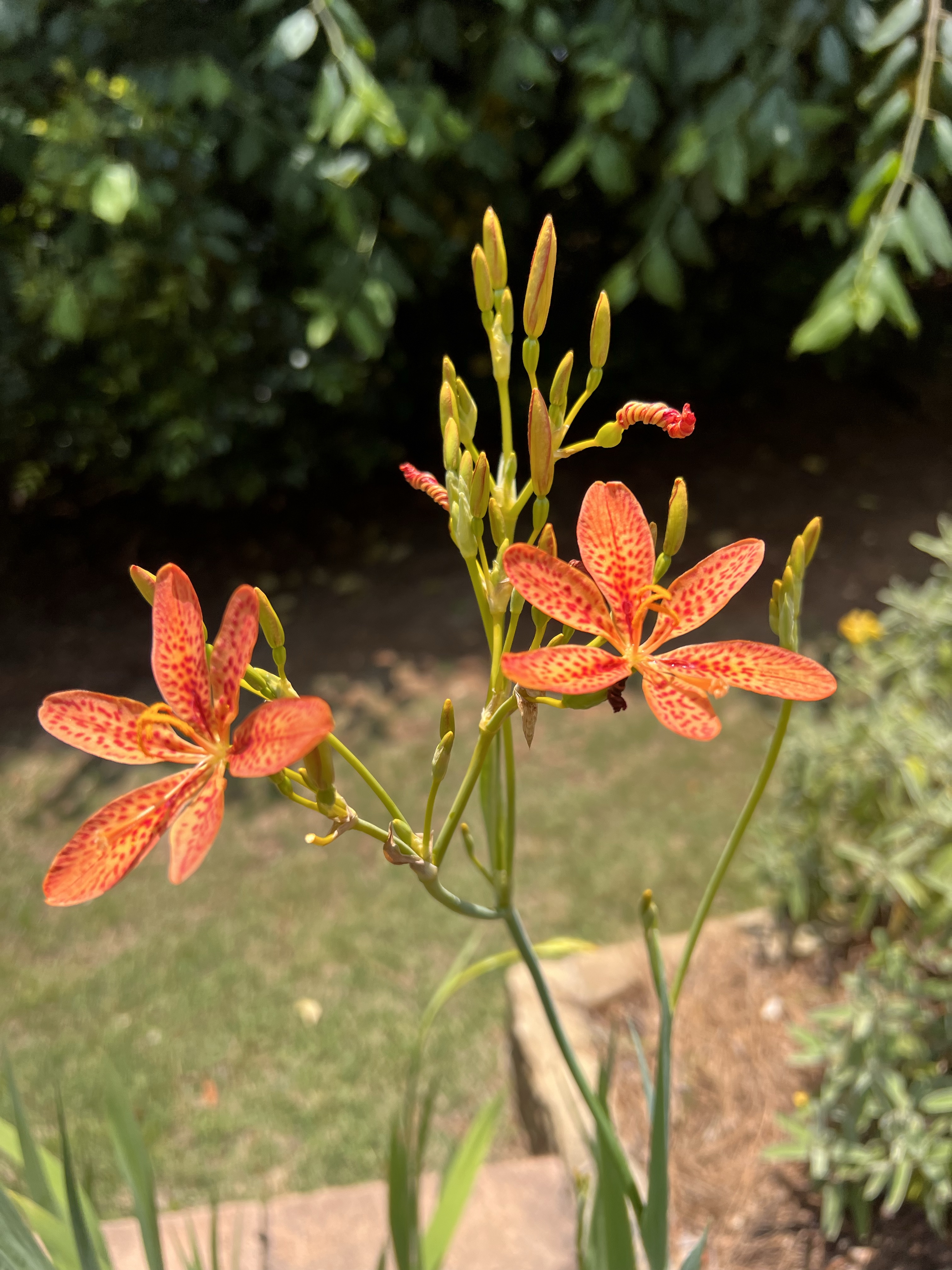
The Leopard lily is Iris domestica and is also commonly called blackberry lily. It is a tall 3 foot plant. I collected seeds from it last year and was surprised how successfully they sprouted. I planted the new plants this spring and they are off to a good start.

This is one of a pair that came in to my garden yesterday while I was picking some blueberries. It is said to be mostly a nocturnal creature. I have never seen a live one during the day. It primarily roots for grubs in lawns and perennial beds. I am not too happy to see them so I hope they will move on.
Don’t forget to check out the Six on Saturday blog hosted by Jim Stephens tomorrow. You can find it here https://gardenruminations.co.uk/
Happy Father’s Day to all the Dad’s out there.


Leave a Reply