It is Spring 12 May 2023

A walk in Birmingham Botanical Gardens. I have been vacationing at the beautiful Gulf Coast city of Destin, Florida this week. The area is beautiful and the seafood is world class. For your pleasure, I am posting photos taken this past week on a walk through the Birmingham Botanical Gardens where I volunteer each week.

Upper left is a mountain laurel, Kalmia latifolia. These native plants are outstanding this year.

Middle right is a group of pitcher plants. This is of the genus Sarracenia and are native to South Alabama.

Upper right is woodland phlox or Phlox divaricata which is native to Alabama woodland forests.

Lower left is Amsonia sp or eastern blue star.

Lower center is a native azalea which have been magnificent this year. I am not sure of species here.

Lower right is a striking native known as firepink or wooland pinkroot. It is Spigelia marilandica.

I am adding this one for you which is a dogwood by appearance of the leaf but with this. striking blooms.

Those are my six. They are natives and local. I will be posting photos from my usual locations next week.

Have a look at our Six on Saturday posts tomorrow. The site is curated by Jim Stephens. Find the link here https://gardenruminations.co.uk.

Happy gardening!!

Late Winter 17 March 2023

It is St. Patrick’s Day and we should be thinking green. It is definitely progressing in that direction in the garden but there is a threat of frost this weekend. I have resisted the temptation to plant prematurely so my caution has been well deserved.

I attended a Native Plant Conference this past weekend so my photos are from that event. I hope you enjoy them.

The first is a red buckeye or Aesculus pavia sometimes called a firecracker plant. It is native and deciduous and widespread. Found this one in the native plant garden at the Birmingham Botanical Gardens.

This second photo is a purple phacelia but I am not certain. The purple phacelia is also known as Fernleaf (Phaelia bipinnatifida). It is found in rocky forests such as where I found it at the Birmingham Botanical Gardens.

This third photo is a Wild Blue Indigo or Baptisia australis. I found this one at the Ruffner Nature Center here in Birmingham. It is not the best photo for which I am sorry. It does reveal the bluish green stems and the flowering stem which is about to burst forth. These are hardy perennials which die back in the winter but reliably reappear in the spring. The blooms can be blue or white.

This next phot is a blood root. Again, I am sorry for the quality of the photo but you can see the beautiful bloom and unusual leaf. This plant Sanguinaria canadensis is a spring ephemeral. The red juice of the underground stem was used by Native Americans as a dye for baskets and clothing.

These are the blooms of the silver bell tree. The genus is Halesia and I think this species is diptera. These beautiful blooms were very abundant. It blooms at approximately the same time as the dogwood Cornus florida and since that native is on the decline from disease, many people think the Halesia is a good substitute.

This photo is Zizia aurea or Golden Alexander. It is very abundant right at this time and this one is in my yard. The white blooms you seen underneath is a dewberry which is a prickly native vine. The Zizia is a host plant for several butterflies so it is a useful plant in the garden. It is a member of the carrot family.

I hope you enjoyed the photos. It is a departure from my usual mission of showing garden photos but since we are still not quite in the abundant blooming season I took the license to post them.

Don’t forget out SOS Six on Saturday group hosted by Jim Stephens so capably. You can find the group at this link https://gardenruminations.co.uk.

Happy gardening!!

October Colors 28 Oct 2022

Even though we have had a dry month, the colors this week have been magnificent.  There is a forecast for rain this weekend which will knock a lot of leaves down so this week my be the maximum for color.

The grass is still showing some color but the growth is slowing.  There are still some blooms appearing to delight and surprise.

Here is this week’s efforts.

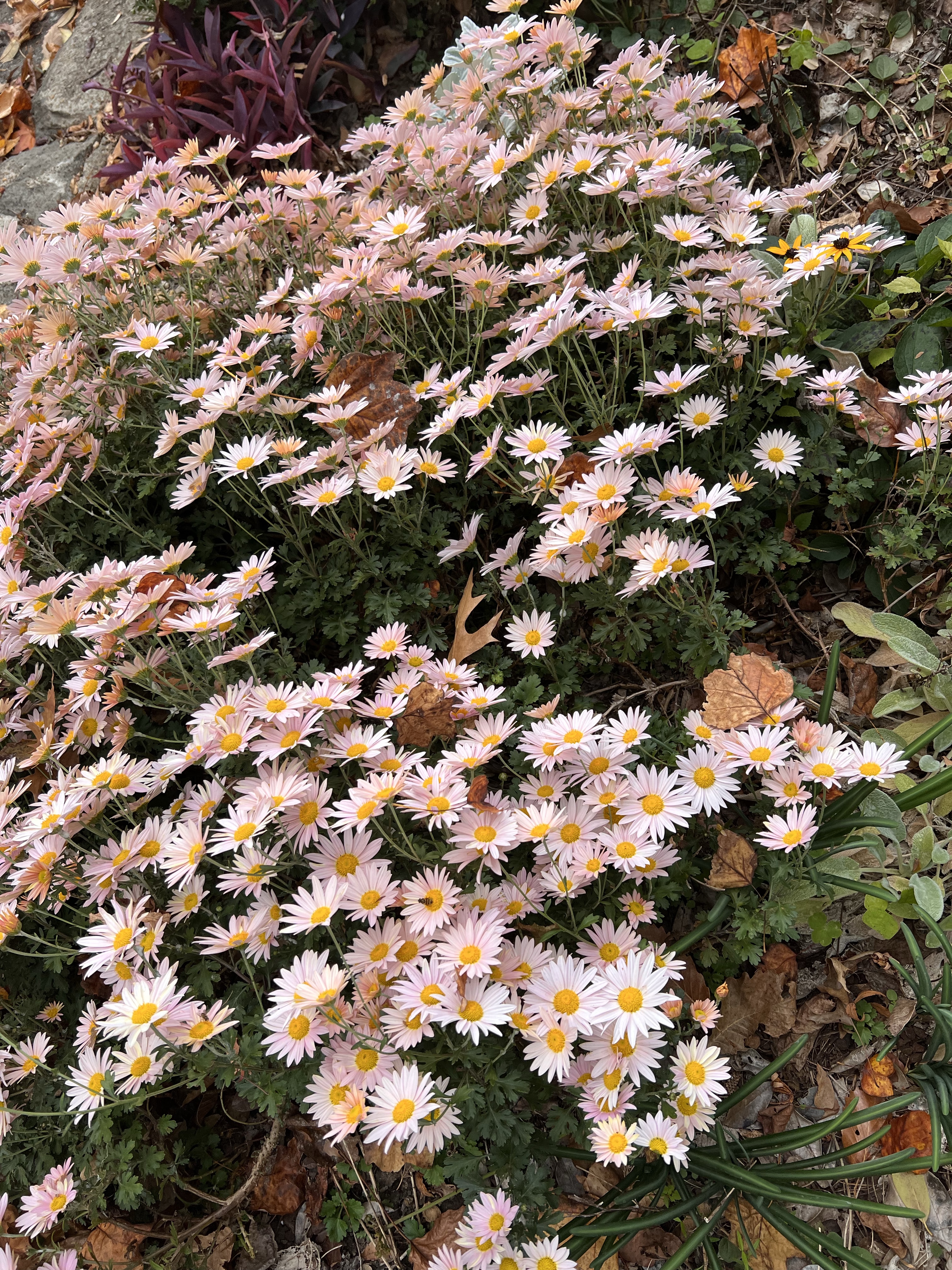
First is this patch of mums growing along the busy street.  Sunlight here is mostly afternoon so the stems stretch in that direction.  I do not know the name.  These are transplants from a volunteer patch.

img_3498

Next is the magnificent shades of a sweetspire (Itea virginica).  This is an Alabama native.

img_3500

Next is a cultivar of a camellia.  These are Camellia sasanqua.  It just started blooming this week.  It is a beautiful fall blooming plant.  It is covered in blooms.  It is usually smaller than its relative Camellia japonica which will bloom in winter.

img_3503

Next is the Sedum  “Autumn Joy”.  It is doing very well in a container that gets plenty of shade.  The blooms are now in the brown phase as they decline but this is their prettiest phase.


img_3499


Next, is the Rudbeckia hirta “Indian Summer” around the flagpole with the border of alyssum.  They are beginning to show a little end of season fatigue.  These have been prolific bloomers all summer and attract the pollinators.

img_3504

Last but not least is my best photo of the week.  This was shot at the Birmingham Botanical Gardens.  This Acer rubra (red maple) is really showing out.

img_3508

As winter approaches with its drabness and wetness, it is such a joy to experience these displays of color in the landscape.

If you have a chance, venture to Garden Ruminations where Jim Stephens is not hosting Six on Saturday.

Happy gardening.

A Stroll In The Gardens

The weather here in the American South continues to be wonderful.  It has been just a little cooler each morning.  Each afternoon we have been having a little bit of rain.  The sky is a clearer blue each morning as the humidity has fallen.

It has been time to take on some fall tasks such as clearing the vegetable garden, pruning some of the spent perennials and planning some hardscape projects.

This weekend is the Fall Plant Sale at the Birmingham Botanical Gardens.  I have volunteered for this sale for several years now.  I took the time to stroll through the gardens and took some photos for you there.

img_3354

I began my walk crossing this bridge leading into the area of the Bog Garden.

img_3353

Along the way, I found this Paw Paw tree (Asimina triloba) with plenty of hanging fruit.  The pawpaws have a sweet taste said to be a blend of mango, banana, berries and pineapple.  It is the host plant for the Zebra Swallowtail although I did not see any.

img_3346

A little further along, I found these seed pods of the strawberry bush (Eunonymous americana).  Its common names include bursting-heart and hearts-a-bustin derived from the image of the fruit I suppose.

img_3347

I then spied this flower of the jewel weed.  It is common along creeks and ditches since it likes bottomland soil.  It is just past its prime but there were abundant blooms remaining.

img_3345

This is the fall panicle of the oak leaf hydrangea (Hydrangea quercifolia).   It is a common plant in our woods.  The blooms linger after the spring and gradually take on a bronze color like this gem.

img_3343

I next found this inland wood oats near the water of the bog.  It is very popular as a low maintenance shade grass.  Its color transitions from green in the spring to ivory in the fall to a brown during winter.

img_3359

Out near the vegetable garden, I saw this cotton at near maturity.

img_3358

Next, I saw this eyecatching orange cosmos.

img_3360

Finally, as I exited the garden I saw this planting of a dwarf sunflower.  It was very happily showing off its bright yellow color in the bright sunshine.

I hope you enjoyed these glimpses of my stroll in the Birmingham Botanical Gardens.

Happy Gardening.

Be sure to take a look at the efforts of the Propagator.

Another cold day in January

27 January 2022

These are Johnny Jump Up violas in my carport window boxed. They have easily persevered during the cold nights we have had in January. I am hoping they will do the same for the next couple of cold nights. I am using my new iPhone 13 for these photos. The portrait mode gives these wonderful close ups with bokeh effect.
My “Jon Bos” hyacinth are beginning to emerge from the containers in my carport. I also have several containers planted with daffodils. Sill waiting for them to emerge.


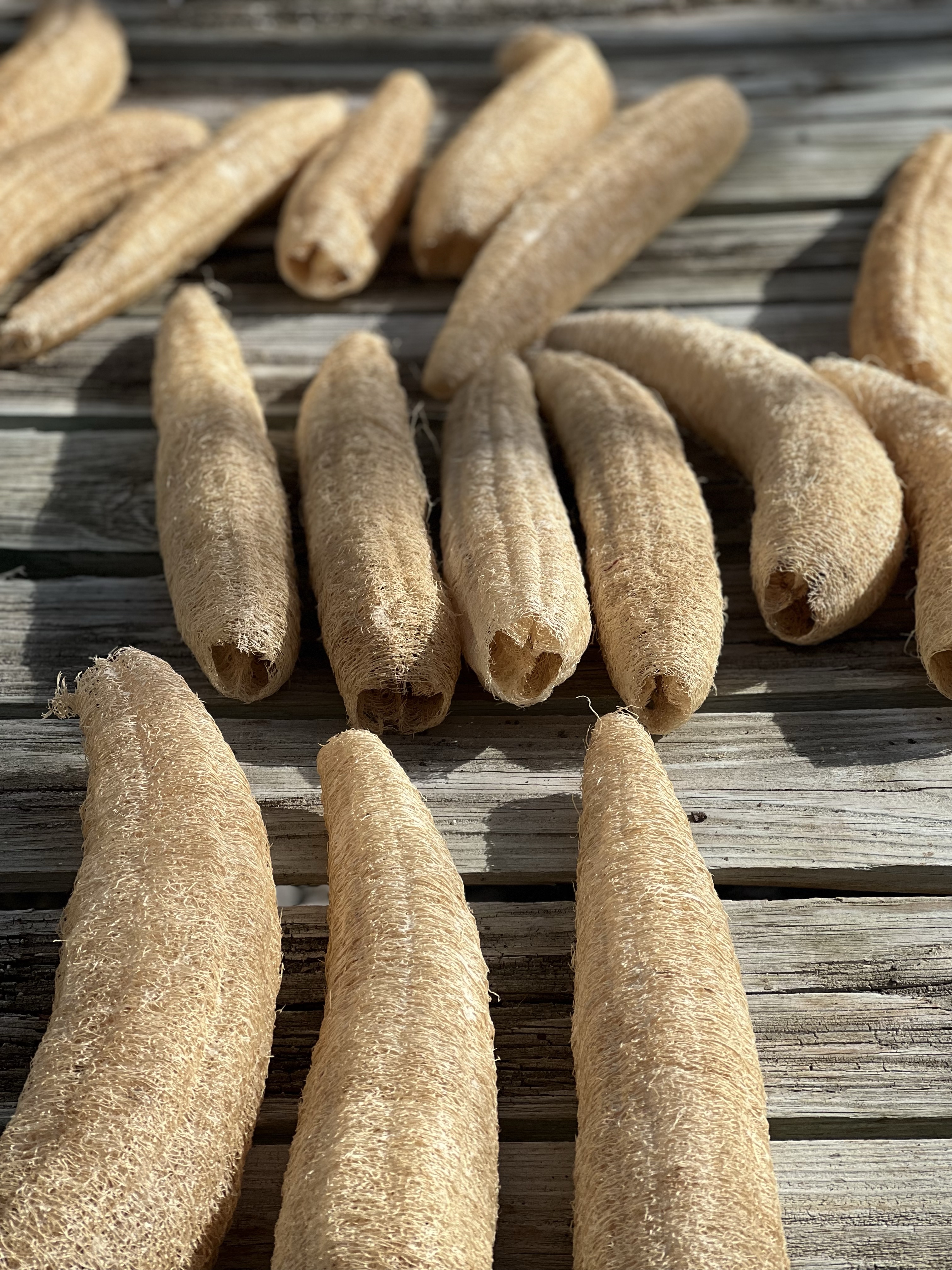
These are dried luffas. If you don’t know these, listen up. The mother plant is a rapidly growing vine like squash. Young luffas can be eaten like yellow squash. If you leave them on the vine, they eventually will dry out. Then, you can peel off the outer skin and you have these. They will replace a sponge and are great in the shower for scraping off areas of dried elbows, knees and heels.


Lone daffodil bloom seen at the Birmingham Botanical Gardens this past week. It is a south facing slope planted amongst some clumping grasses. Very beautiful trumpet as seen on a bright sunny day.


These are some benches we have been working on at the Birmingham Botanical Gardens. They are dedicated benches that have become weathered and covered with mold and lichen. First, we will wash them with a solution of dishwashing soap, vinegar and water. This is about a one hour job. This is followed by sanding with a power hand sander and also some manual sanding. This also takes an hour. I will show you a finished product soon.
A bonus for you today. This is a spotted salamander. Found this photo today on an email that came from Ruffner Mountain. I have been to where these creatures live in the Homewood Forest Preserve. I haven’t seen one but this was fascinating. I have included some text from the email.

The annual Spotted Salamander migration is an incredible sight, as well as the first sign of spring in Alabama – and you don’t have to travel far to see it. A large population of Spotted Salamanders undergoes this migration each year in Homewood, AL, and there is even a festival hosted by the Friends of Shades Creek celebrating their emergence each year! This year’s festival will be hybrid, with a virtual component starting on January 29, 2022, and running through February, and in-person hikes on January 29 and 30. If you love salamanders, I highly recommend attending and asking Friends of Shades Creek how you can get involved in preserving this amazing Alabama amphibian!